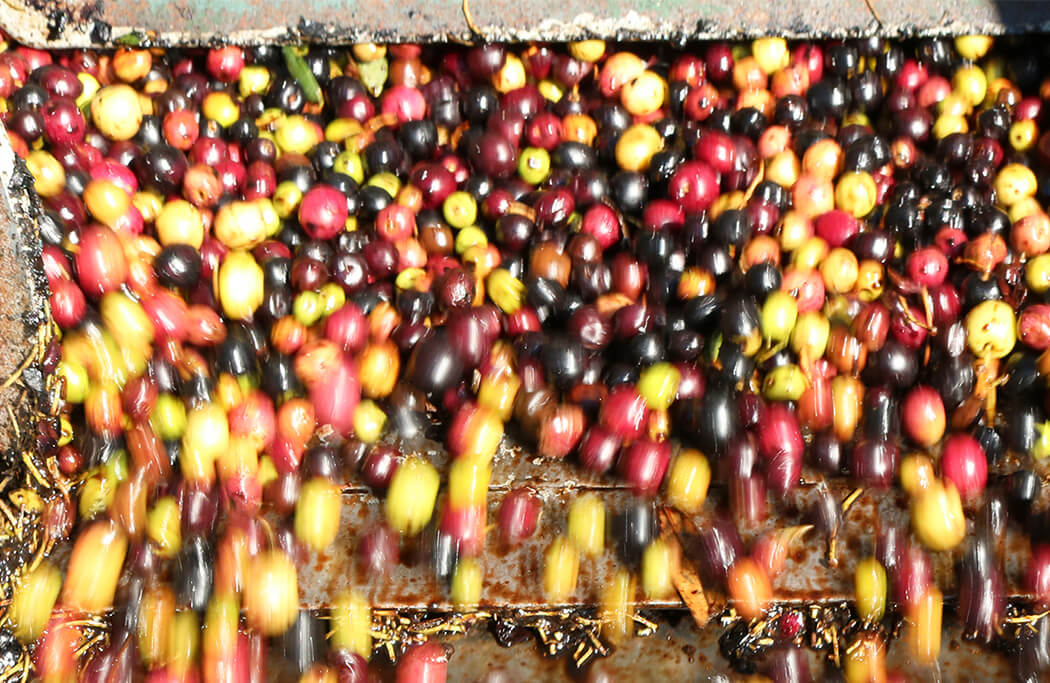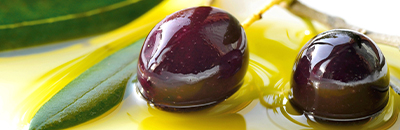
- Extensive expertise and know-how in olive oil production
- Maximum oil yield through innovative two-phase extraction system technology
- 24/7 automated operation with worldwide service support and minimal water usage
Flottweg Centrifuges for Olive Oil Production
Ancient olive oil making was done exclusively by hand. Later, simple machines such as mechanical presses and pan grinders driven by human or animal power were used. The separation of oil, fruit water, and pulp was done by static settling. Nowadays, olive oil is manufactured in a process using modern machinery. In the early 1970s, Flottweg was one of the first companies to introduce decanter centrifuges to the olive oil production process, replacing the existing hydraulic press method. At Flottweg, constant development has since been conducted in order to improve the decanter performance in terms of oil yield, throughput capacity, and machine service life. Since then, Flottweg has delivered thousands of decanters and Tricanters® to all olive oil producing countries in the world.
Our machines for olive oil extraction
Specialized solutions for the olive oil market
In addition to its standard machines for olive oil extraction, Flottweg offers specialized solutions that have been developed specifically for the olive oil market. These machines address very high processing capacities and market‑specific requirements and complement our olive oil portfolio with application‑focused expertise. Our experts will be happy to advise you on the right solution for your specific production requirements.
Z5E-R (Revolution) – High‑performance decanter for olive oil production
The Z5E-R (Revolution) decanter has been developed for olive oil mills requiring high throughput while maintaining excellent oil yields. Its design enables significantly higher performance through increased rotational speed and flexible operation in both two‑phase and three‑phase processes. The machine is suitable for oil mills with capacities of up to 180 tons per day, making it an efficient solution for demanding olive oil production environments.
Z6E Oleum Max 350 – Specialized solution for very high capacities
The Z6E Oleum Max 350 has been specifically designed for olive oil production with very high processing capacities. Developed to meet the requirements of large oil mills, the machine enables a throughput of up to 350 tons per day. The machine is available as a two‑phase decanter and features a special design tailored to the needs of the Spanish olive oil market, where maximum capacity and continuous operation are key success factors.

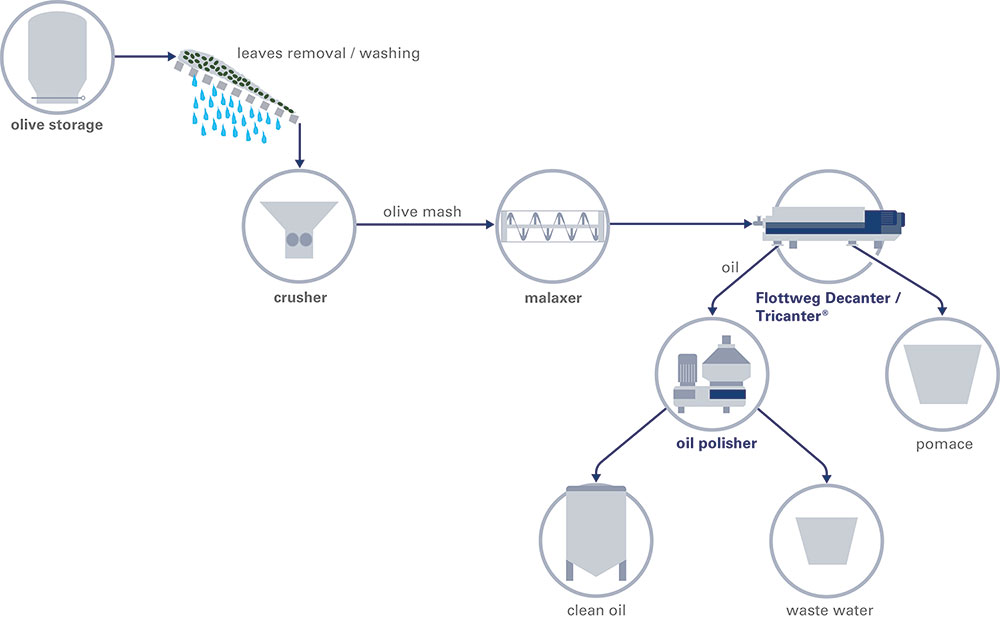
1. Cleaning and crashing of the olives
Prior to processing, olives are cleaned to remove leaves, bits of branches, stones, soil, and other impurities. Then a mash is produced by crushing the olives and pits.

2. Releasing oil through malaxing
This mash is conveyed to the malaxer or kneading mill. Malaxing, releases the oil from the oil cells encapsulating it. The malaxing procedure is critical for oil yield and quality. The influencing parameters are holding time and temperature.
3. Separation in the decanter
Then the mash is pumped to the Flottweg decanter (2-phase) or Tricanter® (3-phase) for separation. In the Tricanter® (3-phase), the mash is separated into oil, fruit water and solids, i.e. olive stone debris and pulp. On the way to the Tricanter®, dilution water is added to the feed in order to fluidize the mash. In the 2-phase process, the mash is separated into oil as liquid phase and solid phase (pomace) consisting of olive stone debris, pulp and fruit water.
4. Obtain clean oil with a separator
The oil from the Flottweg decanter or Tricanter® is then polished using a disc stack centrifuge, which separates the residual amount of water and solid impurities to obtain clean oil.
5. Increasing oil yield (optional)
A certain amount of residual oil remains in the pomace from the extraction. In order to recover this oil, the pomace undergoes a second extraction stage.
Greater profit thanks to the 2nd extraction phase in olive oil manufacture
Flottweg decanters and Tricanters® are optimized for maximum oil yield. Nevertheless, the technical yield in oil during the first extraction is typically in the range about 85% and more, due to the olive variety, operation temperature and other process parameters. This is true for 2- as well as 3-phase operation.
The pomace after first extraction contains a certain amount of residual oil which is worth recovering. Depending on the efficiency of the first extraction, i.e. oil concentration in the pomace, up to 50 % of the oil can be recovered (depending on the incoming product temperature) via a second mechanical extraction stage, thus significantly increasing the gross oil yield. The second extraction can be performed normally in 2- or 3-phase operation without having to add water.
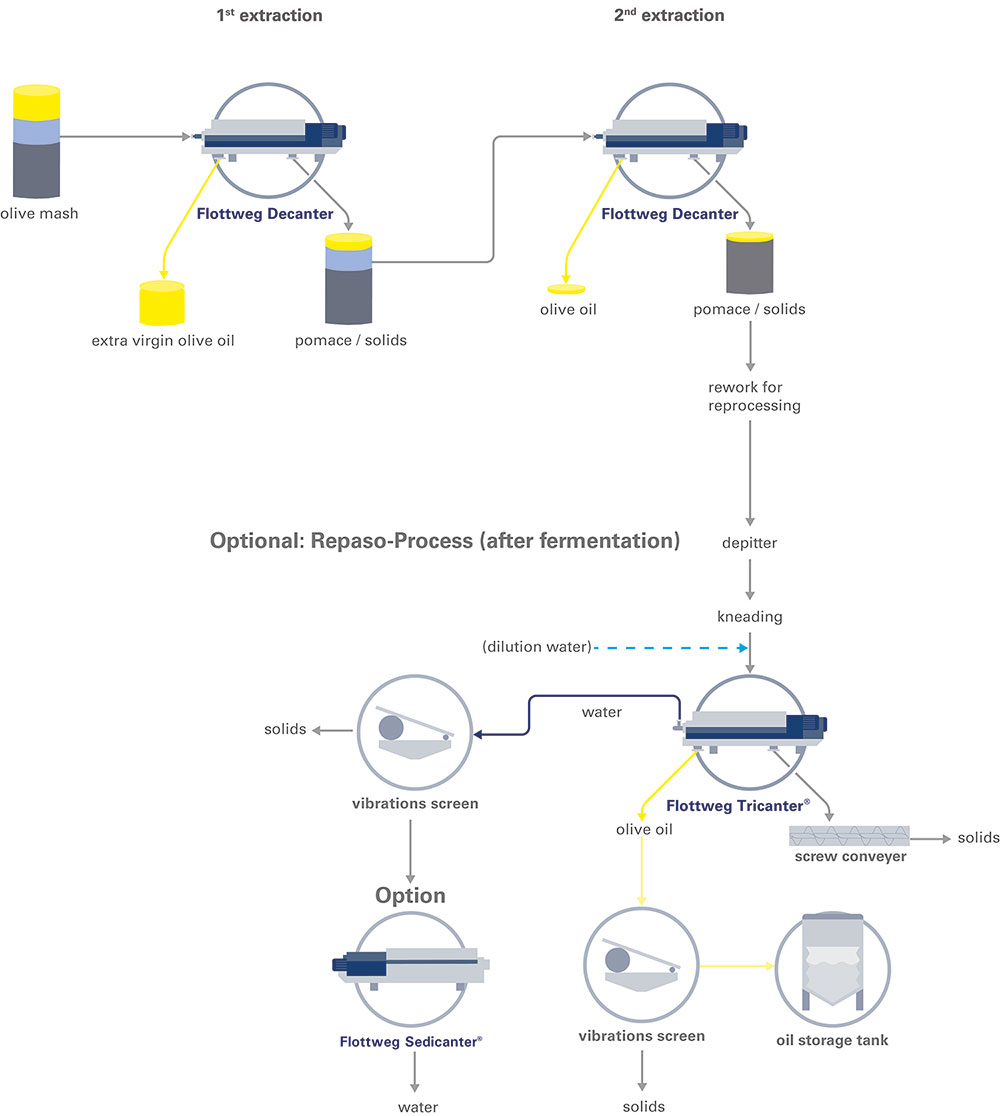 Sample process combining the 1st and 2nd extraction phases.

Efficiency
When using Flottweg machines in manufacturing and extracting olive oil, you benefit from very low fresh water consumption and reduced wastewater.
Profitability & quality
Production costs and raw material prices are rising. To help our customers continue offering competitive prices, Flottweg maximizes the yields and reduces the energy costs to get first-class olive oil.

Automation
Flottweg machines can be operated 24/7, are made of high-quality materials, and offer numerous practical features.

Service
Even the best machine needs servicing from time to time. Flottweg has subsidiaries and representatives all over the world that have an ear for your concerns.
Flottweg separation technology for olive oil production at Virgen del Voto S L
Over 90% of the world’s olives are harvested in the Mediterranean region. One of the foremost areas is the Spanish region of Andalusia. The Cordoba area is where the majority of Spanish olives are grown and processed. One of those companies is Virgen del Voto S L in the town of Bujalance. Between 1.2 and 1.5 million kilograms of olives are processed on site.