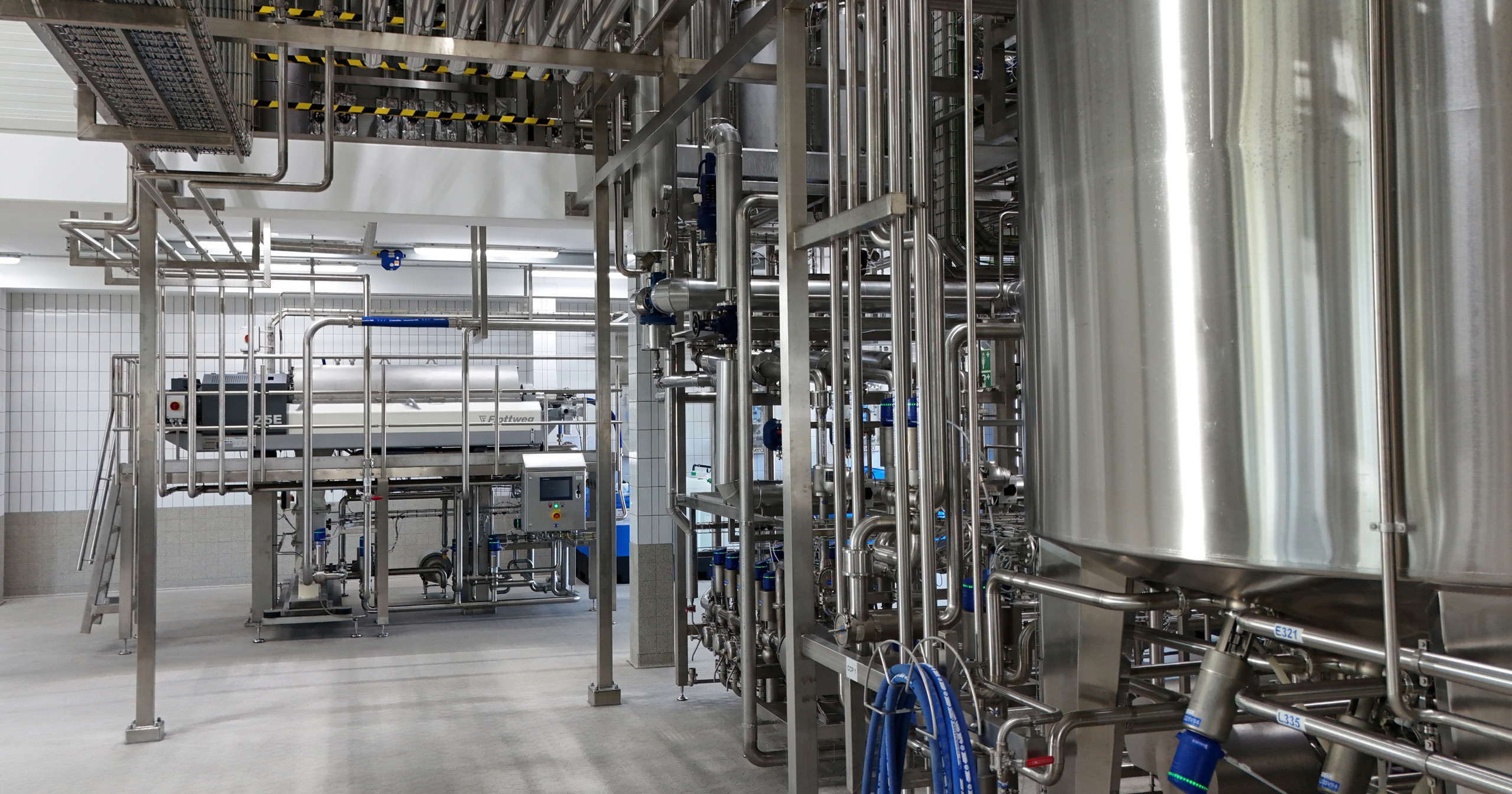
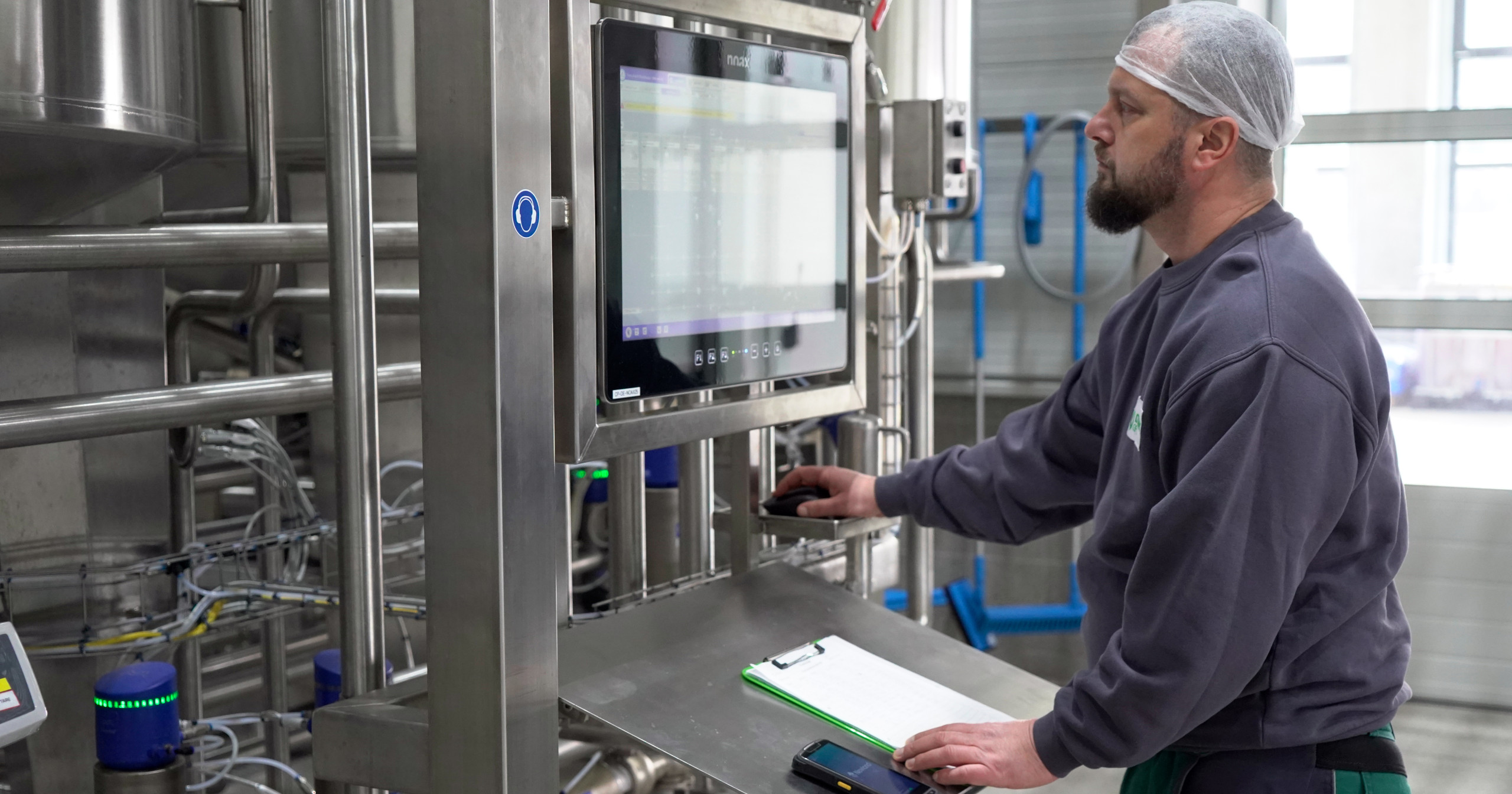
The production of oat drinks differs fundamentally from traditional fruit processing. It requires the precise coordination of multiple process steps to ensure consistently high product quality. At Fidel Dreher, cleaned oat raw materials are first mixed with water and enzymes before being processed in a two-stage milling process. This is followed by hydrolysis, during which the raw material is enzymatically broken down.
Plant-based dairy alternatives place particularly demanding requirements on manufacturing processes. Consumers expect a product with a consistent texture, pleasant mouthfeel, and high stability. At the same time, manufacturers need processes that are flexible enough to reliably accommodate different formulations and sweetness levels. From unsweetened products to more extensively hydrolyzed recipes, each product variant requires precise process control.
One particularly critical process step is the subsequent solids separation. Following hydrolysis, the suspension still contains solid particles that must be removed in a controlled manner to achieve the desired product quality. The efficiency of this separation step has a decisive impact on the texture, stability, and homogeneity of the final product. Reliable and precise separation is therefore essential to ensuring consistent results.